
In the education sector, reputation is everything. Parents, students, and stakeholders do not make decisions based on advertisements alone. They look for credibility, consistency, and trust. In an environment where hundreds of schools, colleges, and training institutes compete for attention, Public Relations plays a critical role in shaping perception and building long-term confidence.
PR helps educational institutions communicate not just what they offer, but who they are, what they stand for, and why they can be trusted.
1. Education Decisions Are Built on Trust, Not Marketing Claims
Choosing a school, college, or training institute is a deeply personal and long-term decision. Parents and students want assurance about academic quality, values, safety, outcomes, and credibility.
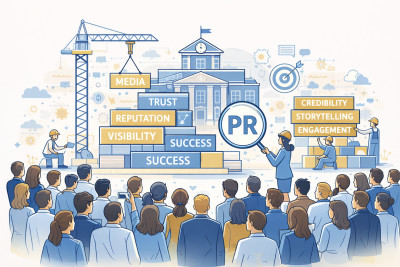
PR supports this decision-making process by creating visibility through earned media, institutional storytelling, leadership communication, and consistent messaging. When an institution appears in respected publications or is known for its academic initiatives, trust develops organically.
Unlike advertisements, PR provides third-party validation, which carries far greater weight in the education sector.

2. PR Helps Institutions Communicate Their Values and Vision
Every educational institution has a unique philosophy, teaching approach, and vision for its students. However, these aspects are often difficult to communicate through brochures or ads alone.
PR helps articulate:
- the institution’s academic philosophy
- achievements and milestones
- student success stories
- faculty expertise
- innovation in teaching and learning
Through press releases, interviews, feature articles, and thought leadership content, PR gives institutions a voice that goes beyond admissions cycles.
3. Standing Out in a Competitive Education Landscape
The education sector is highly competitive, especially in urban regions. Institutions often offer similar curricula, facilities, and extracurricular activities. What differentiates them is perception.
PR positions institutions as leaders rather than participants. Whether it is a school, college, or specialised training institute, strategic PR helps highlight strengths in a way that feels authentic and credible.
Aaspire PR having worked with a wide range of educational institutions such as Podar International School, Wisdom World School, Centre for Development of Advanced Computing(CDAC), Sanskriti School, Indira Group of Institutes, Vidya Valley School, Bharatiya Vidya Bhavan, Pune Institute of Computer Technology(PICT), Akshara International School, etc, it becomes clear that strong PR is essential regardless of whether the institution is school-level, higher education, or skill-based.
Each institution requires a customised communication approach based on its audience, academic focus, and long-term goals.
4. PR Supports Admissions Without Hard Selling
PR does not replace admissions marketing. It strengthens it.
When parents and students already recognise an institution through media coverage, academic initiatives, or community engagement stories, the admissions process becomes smoother. PR builds familiarity and confidence long before a prospect reaches the admissions desk.
This reduces dependency on aggressive advertising and creates a more sustainable reputation-driven admissions funnel.
5. Crisis and Reputation Management in Education Is Crucial
Educational institutions operate in sensitive environments involving children, young adults, parents, and regulatory bodies. Any issue, whether related to misinformation, policy changes, or unexpected incidents, needs careful communication.
PR ensures that responses are clear, responsible, and aligned with institutional values. It protects reputation while maintaining transparency and trust.
6. Long-Term Visibility Beyond Admissions Season
Most education marketing spikes during admissions periods. PR, however, works year-round. Academic achievements, events, collaborations, awards, and innovations deserve ongoing visibility.
This long-term presence positions institutions as stable, credible, and committed to excellence, not just enrolment numbers.

Conclusion
In education, perception shapes decisions. Aaspire Digital PR helps institutions communicate credibility, values, and impact in a way that advertising alone cannot achieve. It builds trust, strengthens reputation, and supports sustainable growth.
For schools, colleges, and training institutes, PR is not an optional add-on. It is a strategic investment in long-term credibility and public confidence.
Also Check: Why PR Is Important for Real Estate Developers, Why PR Is Important for Tech Startups